


September 2025
IMPORTANT: Some linked documents are hosted on external websites and may not meet current accessibility standards. If you need assistance accessing this content, please contact charterschools@svsu.edu or (989) 964-4623, and we will work with you to provide the information in an accessible format.
SPOTLIGHT STORY
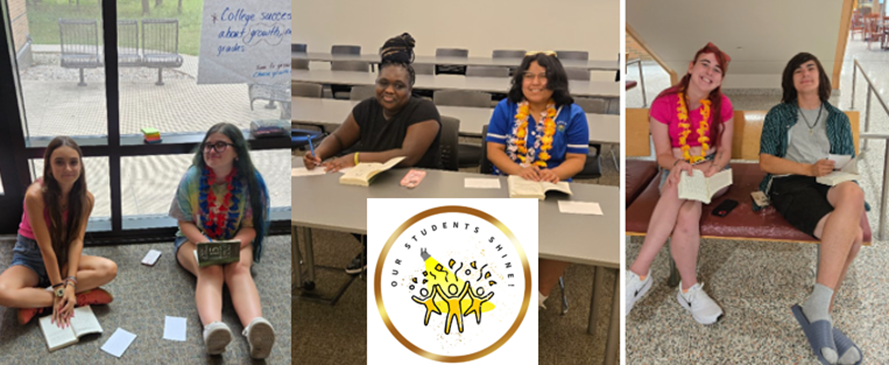
Public School Academy Scholars and Promise Students Arrive and Thrive!
The Cardinal Partnership Program welcomed 21 charter school alumni to campus during the month of August. Students were able to move in early, receive mentors, meals, meet with staff, and experience academic and college readiness preparation.
For more information visit the Cardinal Partnership Program website.
SCHOOL LEADERS
SCHOOL LEADERSHIP CONFERENCE #1 – RECAP
On August 15, 2025, forty-three charter school leaders gathered for a professional development event focused on leadership and growth. The morning session, led by George Copeland, Director of the Cardinal Partnership Program and a Certified John Maxwell Trainer, centered on The 15 Laws of Invaluable Growth. In the afternoon, leaders participated in sessions on Reconnecting the Dots: Aligning Mission, Instruction, and Assessment (Educational Programs), Grants for Growth: Turning Ideas into Impact (Innovation grants for schools and staff), and Professional Learning Communities Plus– Better Decisions by Design. Participants also received copies of The 15 Laws of Invaluable Growth book and the PLC+ Workbook to support their continued learning and implementation.
Future Dates:
- Friday, November 21, 2025
- Friday, March 6, 2026

NEWS YOU CAN USE
STUDENT SERVICES UPDATE
THRUN LAW School of Choice Refresher
Special Education
If a student is enrolled under Section 105 (student resides within the same ISD) and is eligible for special education programs and services, that student is considered a resident of the enrolling district for purposes of receiving a free appropriate public education.
In contrast, Section 105c creates additional requirements for a student who resides in a contiguous ISD and is eligible for special education programs and services. To enroll a nonresident special education student under Section 105c, the enrolling district must have a written agreement with the student’s resident district that addresses special education costs and how the agreement will be amended if there is a significant change in the costs or level of special education that the student requires. The law is silent, however, as to which district must pay for the student’s special education programs and services. If the enrolling and resident districts do not reach an agreement before the student’s initial enrollment, the student cannot be enrolled.
If a student is initially enrolled as a general education student under Section 105c but later becomes eligible for special education services, the enrolling district becomes the resident district for purposes of providing FAPE and may not “send back” the student.
Michigan’s schools of choice law is complex, and significant state funding penalties may be imposed for noncompliance. School officials should consult with legal counsel on schools of choice and other enrollment questions.
District Website Updates
Just a reminder: Action Required by September 1, 2025
Administrators should regularly review district websites to ensure all posted information remains current, accurate, and accessible. Additional guidance can be found on the Michigan Department of Education – Office of Special Education: https://www.michigan.gov/mde/services/special-education
Posting of District Procedures
To support consistent compliance across districts, we are providing procedural templates that fulfill upcoming website posting requirements. These templates should be adapted and posted in a visible, accessible location on your district website by September 1, 2025.
Child Find and Evaluation Procedures
Outlines how the district identifies, locates, and evaluates students who may be eligible for special education services under IDEA. Download Template: Child Find and Evaluation (Template)
Discipline Procedures for Students with Disabilities
Details district-level disciplinary protocols, including protections for students with IEPs and processes for manifestation determinations and behavior supports. Download Template: Disciplinary Procedure (Template)
District teams should ensure that staff are aware of these procedures and trained accordingly. Whether using these templates or an internal version, districts must ensure compliance with both federal and state expectations.
If your district needs support adapting these documents, please don’t hesitate to reach out. We are here to help ensure your compliance efforts are successful and sustainable.

SCHOOL SAFETY
School Safety: Michigan State Police Detect and Connect Program
The Detect & Connect Facilitator’s Guide (1,707KB) is designed to complement the video training series and provide practical tools for leading meaningful discussions on key school safety concepts. This resource helps facilitators adapt examples to their unique school community, professional roles, and local context.
Under Michigan Public Act 272 of 2024, all schools must establish a behavioral threat assessment and management team by October 2026. Knowing your role in this process—and trusting it—can make the difference in connecting students with the right resources and saving lives.

INNOVATION GRANT PROGRAM
As we continue to support our partners in education, we encourage you to take advantage of the grant opportunities available through the Charter Office. We are grateful for the ability to offer both school and teacher grants—and we don’t take that privilege lightly.
Each year, however, some academies choose not to apply for either grant. While these opportunities are available, we urge every academy team to thoughtfully consider how the Innovation Grants could benefit your staff and students.
SCHOOL INNOVATION GRANT:
- 2025-26 School Innovation Grant Description (48KB)
- 2025-26 School Innovation Grant Application (41KB)
- 2025-26 School Innovation Grant Report Form (112KB)
Up to $15,000 per school building
DUE: September 26, 2025
+++++++++++++++++++++++++++++++++++++
TEACHER/STAFF INNOVATION GRANT:
- 2025-26 Teacher/Staff Innovation Grant Description (49KB)
- 2025-26 Teacher/Staff Innovation Grant Application (41KB)
- 2025-26 Teacher/Staff Innovation Grant Report Form (115KB)
Up to $1,000 (up to two per building)
DUE: November 3, 2025

PROFESSIONAL DEVELOPMENT
8 Free Virtual Learning Sessions based on "PLC+ A Playbook for Instructional Leaders"
by Nancy Frey, Dave Nagel, Douglas Fisher, Toni Faddis and Aida Allen-Rotell
All sessions from 10:00 am - Noon (registrations below)
For more information see the School Leader page.
++++++++++++++++++++++++++++
TRAINING RESOURCES FOR TEACHING STAFF
SOLVING CLASSROOM DISCIPLINE PROBLEMS ONLINE TRAINING COHORT - BEGINS OCTOBER 15, 2025
Why do some teachers enjoy peaceful, orderly classrooms while other teachers face daily discipline battles? The answer is that many teachers have not been taught the secrets to solving discipline problems. This course reveals those secrets and presents a step-by-step approach to effective, positive classroom discipline. Teachers continually rate this course as one of the most valuable they have ever taken. For more information, click HERE and scroll down to offering title.
This is a 6-week instructor moderated online course for employees at SVSU authorized charter schools. Participants earn 24 SCECH credits.
School leaders - contact Chantra D. Williams to register your team for virtual courses utilizing the teacher tuition discount offered by The Charter Collaborative. The $148 cost per person may be 100% covered. Teams of 5 or more are requested per building so that they can use what they are learning within a professional learning community for greater impact.
++++++++++++++++++++++++++++
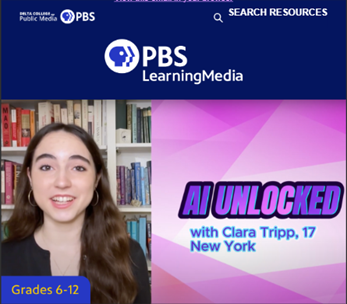
AI Unlocked: Using AI Responsibly/PBS News Hour Video
Do Your Students Know How to Use AI Responsibly?
Kick off the school year with a timely, thought-provoking lesson that will get your students practicing their media literacy skills and thinking critically about the technology that’s shaping our world. Use this engaging new resource from PBS News Hour Classroom to introduce your students to the ethical use of artificial intelligence and how it can be used as a tool (when appropriate!) for the classroom.
2026-27 MICHIGAN TEACHER OF THE YEAR NOMINATION WINDOW OPEN
The 2026-27 Michigan Teacher of the Year nomination window is open. This annual program recognizes outstanding teachers in our state. Each year, ten Regional Teachers of the Year are selected through a competitive application process, with one of the Regional Teachers of the Year named Michigan Teacher of the Year.
Parents/guardians, students, colleagues, and community members are invited to nominate a teacher. To be eligible, a nominee must have a valid Michigan teaching certificate, at least five years of teaching experience in Michigan, and be in good standing with their school or district. Teachers cannot self-nominate.
Please make nominations using the ONLINE FORM, which is available until Wednesday, September 24, 2025, at 11:59 p.m. ET.
We recognize that some districts and intermediate school districts have an established process for awarding local teachers of the year. District representatives are welcome to nominate their district level teachers of the year by directly emailing MTOY@Michigan.gov.
To learn more about the Michigan Teacher of the Year program and MDE's other educator recognition programs, visit the program webpage. Please contact MTOY@Michigan.gov with questions regarding the program or nomination process.
TALENT POOL
The Michigan Talent Pool is a group of elementary and secondary educators nominated by their supervisors that the Michigan Department of Education draws upon throughout the year when opportunities for engagement and recognition become available.
We welcome recommendations of outstanding classroom teachers and/or principals who exhibit strong potential for professional leadership, and demonstrate the following:
- Exceptional educational talent as evidenced by effective instructional practices and student learning results in the classroom and school.
- Exemplary educational accomplishments beyond the classroom.
- Contributions to education that are largely unheralded, yet are worthy of the spotlight; and
- An engaging and inspiring presence that motivates and impacts students, colleagues, and the community.
Recommendations to the Talent Pool should be submitted by the nominee's supervisor and can be made via the online recommendation form.
The nomination form includes a one-page letter of recommendation explaining how the nominee meets the above criteria. Please note that these recommendations are confidential and should not be discussed with the recommended educator or others in your school or community.
Please direct any questions to Jennifer Robel at RobelJ@Michigan.gov.
CONTACT US.
The Charter Collaborative
Office Location: Gilbertson Hall
Email: charterschools@svsu.edu
Phone: (989) 964-4623