

Overview - Key Provisions
Overview - Key Provisions Chart
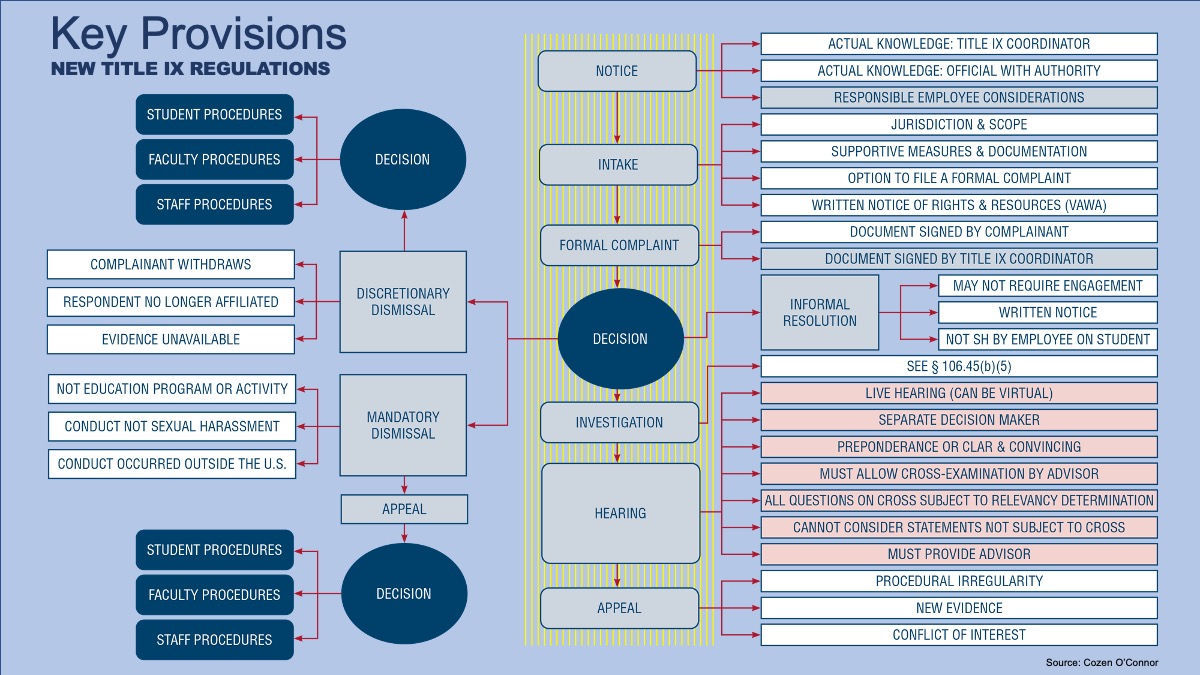
This diagram outlines the key provisions of the new Title IX regulations using a structured flowchart with three main sections: dismissal pathways on the left, the core grievance process in the center, and detailed procedural requirements on the right.
The central process is shown as a vertical sequence. It begins with Notice, followed by Intake, then Formal Complaint, leading to a Decision point. From there, the process continues through Investigation, then Hearing, and concludes with Appeal. Arrows indicate a top-to-bottom progression through each stage.
On the right side, the diagram lists requirements tied to each stage. At the Notice stage, it identifies who has actual knowledge, including the Title IX Coordinator and officials with authority, along with responsible employee considerations and jurisdiction and scope. During Intake, institutions must provide supportive measures and documentation, inform individuals of the option to file a formal complaint, and issue a written notice of rights and resources, including those under the Violence Against Women Act. At the Formal Complaint stage, documents must be signed by both the complainant and the Title IX Coordinator.
An Informal Resolution option is shown as an alternative path. It may not require full participation, requires written notice, and cannot be used in cases involving employee misconduct toward a student.
At the Hearing stage, several procedural requirements are listed. These include a live hearing that may be conducted virtually, a separate decision-maker, use of a defined standard of evidence such as preponderance or clear and convincing, and required cross-examination conducted by advisors. Only relevant questions are permitted, statements not subject to cross-examination cannot be considered, and institutions must provide an advisor if one is not available.
The Appeal stage includes grounds such as procedural irregularity, new evidence, and conflicts of interest.
On the left side, the diagram shows dismissal pathways. Mandatory dismissal applies when the reported conduct does not meet Title IX criteria, such as not being sexual harassment, not occurring within an education program or activity, or occurring outside the United States. Discretionary dismissal may occur if the complainant withdraws, the respondent is no longer affiliated with the institution, or evidence is unavailable. Both types of dismissal allow for appeal.
Decision points are represented as circular elements connected to separate procedures for students, faculty, and staff, indicating that outcomes are handled through different institutional processes depending on the individuals involved.
The diagram uses arrows throughout to show flow and relationships between steps. The source is Cozen O’Connor.
Saginaw Valley State University’s Title IX Process: Step-by-Step
1) Support and Intake
After receiving a report, the Title IX Coordinator meets with the complainant to explain supportive measures, available resources, and options for moving forward through either informal or formal resolution.
2) Formal Complaint
If the complainant chooses to proceed formally, an investigation is initiated. The Title IX Coordinator provides the respondent with a notice that includes the allegations and outlines next steps.
3) Investigation and Interviews
The Title IX Coordinator meets with the respondent to review the allegation, procedures, and available support. Impacted parties and relevant witnesses are interviewed, and both sides have an equal opportunity to submit and review evidence.
4) Hearing
Once interviews and evidence gathering are complete, a hearing is held where impacted parties and witnesses are questioned by a hearing officer or panel. Each party is represented by an advisor during the process.
5) Outcome and Resolution
A written decision is issued. If the respondent is found in violation of university policy, appropriate sanctions are assigned. Both parties may request an appeal under limited circumstances.
Contact Information
For more information or assistance, contact Dr. Mamie Thorns, SVSU’s Title IX Coordinator, by calling 989-964-4068, emailing diversity@svsu.edu, or visiting svsu.edu/titleix.
Download Printable Flyer: Title IX Process pdf (614KB)
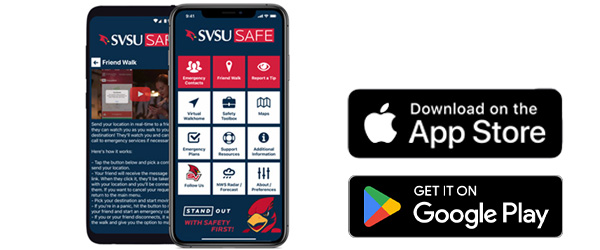
Download SVSU SAFE App
The app features emergency contacts, crisis alerts, location services features, in-app tip reporting, and much more!
CONTACT US.
Title IX Coordinator - Dr. Mamie Thorns
mtthorns@svsu.edu
(989) 964-4068
Emergencies
911 Cell Phone
911 Campus Phone
University Police
dispatch@svsu.edu
(989) 964-4141